
Hiking the Zion Narrows: What to Know Before You Go
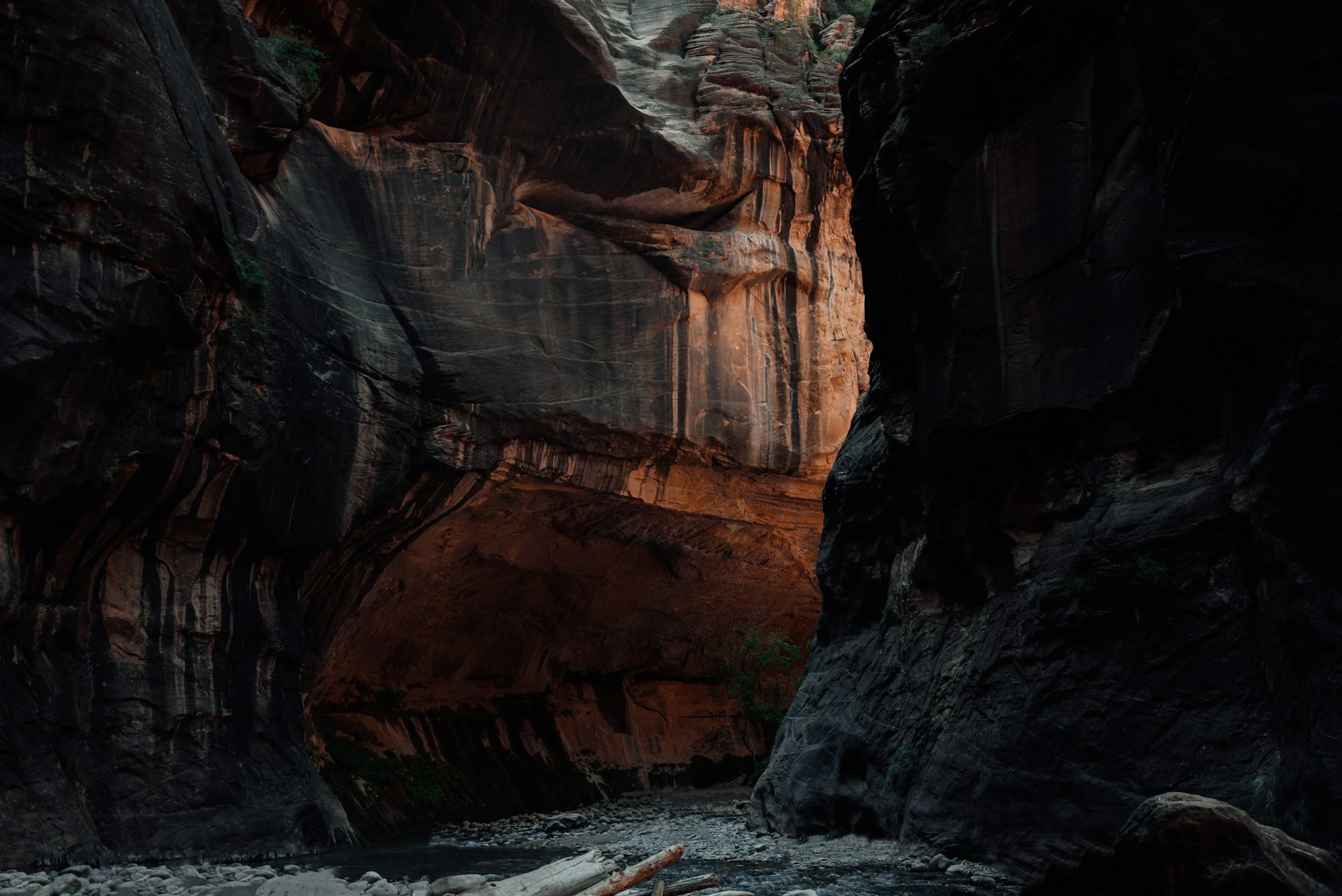
Springdale sits right at the mouth of Zion Canyon, and the Narrows starts almost exactly where the pavement runs out. Step off the Riverside Walk at Temple of Sinawava and the canyon closes in fast — walls rising a thousand feet on either side, sometimes close enough that you could touch both if you stretched your arms out. From there, the Virgin River is your trail. There's no path, no boardwalk, just cold water and smooth sandstone underfoot.
Hiking the Zion Narrows means walking directly in the Virgin River through the tightest section of Zion Canyon, where towering walls narrow to as little as twenty feet apart in places. Most visitors go bottom-up from Temple of Sinawava, wading anywhere from one to five miles round trip, with water temperatures ranging from the low 40s in winter to the mid-60s by late summer. That range matters more than most people expect, and it's the first thing we talk through with clients before they go.
How Cold Is the Water, Really?
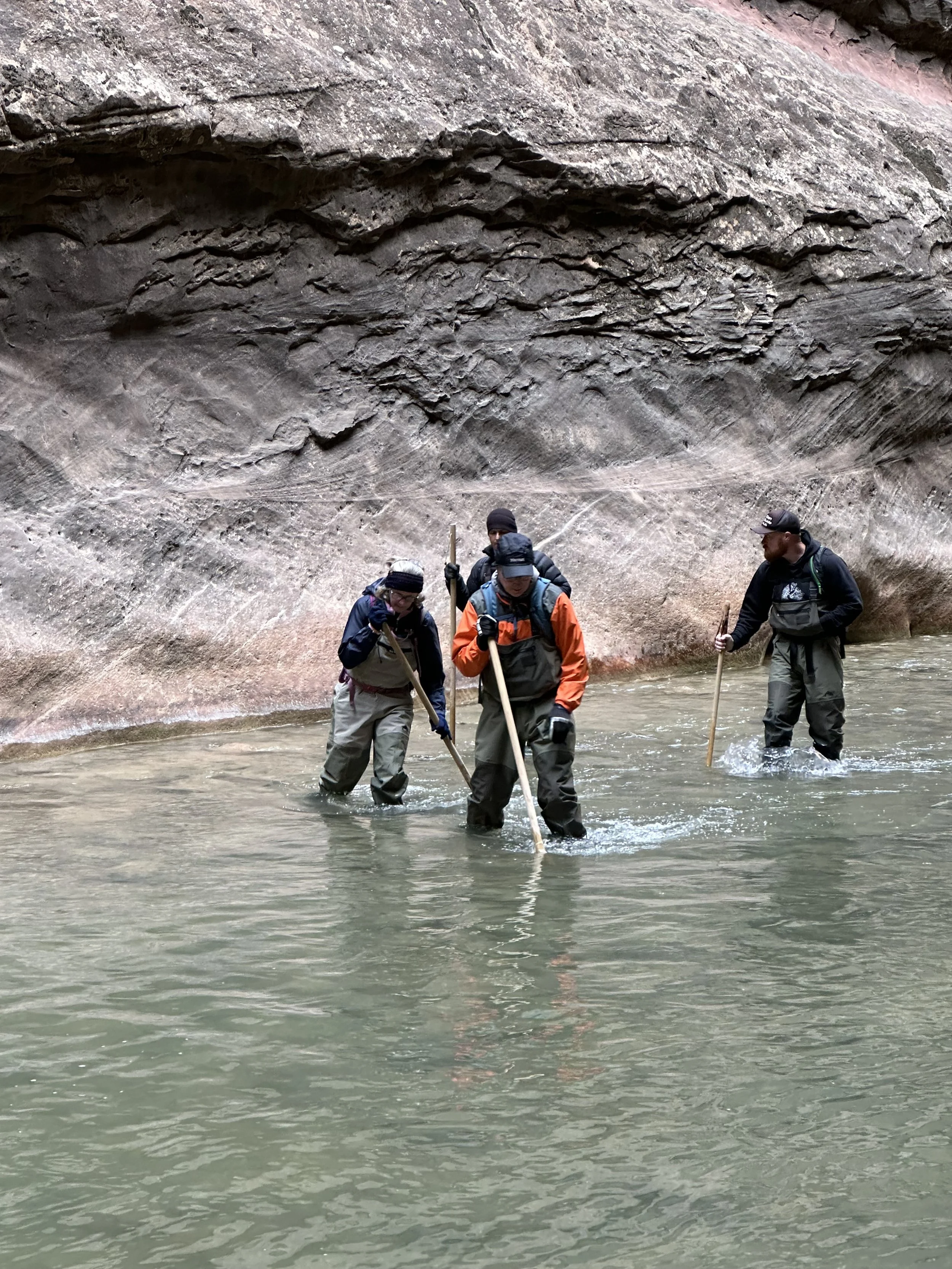
Water temperature shifts with the season, and it drives almost every gear decision you'll make. During spring runoff (April through early June), the river stays cold and fast, often sitting in the 40s and low 50s, with flows that can occasionally push the canyon closed entirely when snowmelt is heavy. By midsummer, the water warms into the 60s and sometimes touches 70, which is part of why July and August are the busiest months on the trail.
Fall is the season we point most of our couples and families toward. Air temperatures settle into the 70s and 80s, the crowds thin out, and the afternoon light turns the canyon walls gold. Water temps start dropping again by October, usually back into the 50s, and by November you're into winter conditions — water in the 40s or colder, with snow sometimes dusting the rim above you.
What the Hike Is Actually Like
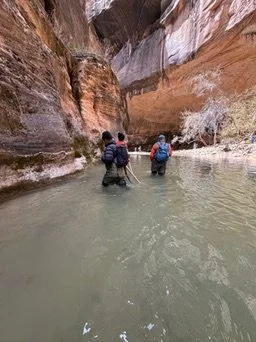
This isn't a stroll. You're walking on a riverbed of rounded, slick rock, in current that ranges from ankle-deep to waist-deep depending on where you are and how much water is flowing that week. Footing is the real challenge, not distance. Most bottom-up hikers cover one to five miles round trip, with Big Spring as the common turnaround point for a day hike — and it's slow going, so plan on a half-day for the longer stretch.
The canyon narrows and widens as you move through it, with long stretches of knee-deep wading and other spots where you're scrambling around boulders or bracing against a stronger current. It's a genuine workout, and it humbles people who consider themselves strong hikers. We tell our couples it's one of the best adventure days in Zion, and we tell families it's a great fit for kids who are confident in water and steady on their feet — not the best first hike for very young children, given the current and the uneven footing.
If you want more than the bottom-up out-and-back, the full Narrows traverse runs about 16 miles one way, starting at Chamberlain's Ranch outside the park and ending back at Temple of Sinawava. It's usually done as a long single day or an overnight, and it's a completely different trip than the day hike — more remote, more committed, and worth planning around with us well ahead of time.
Our Gear Recommendations
We don't send clients into the Narrows underprepared, and we don't recommend gear we haven't used ourselves.
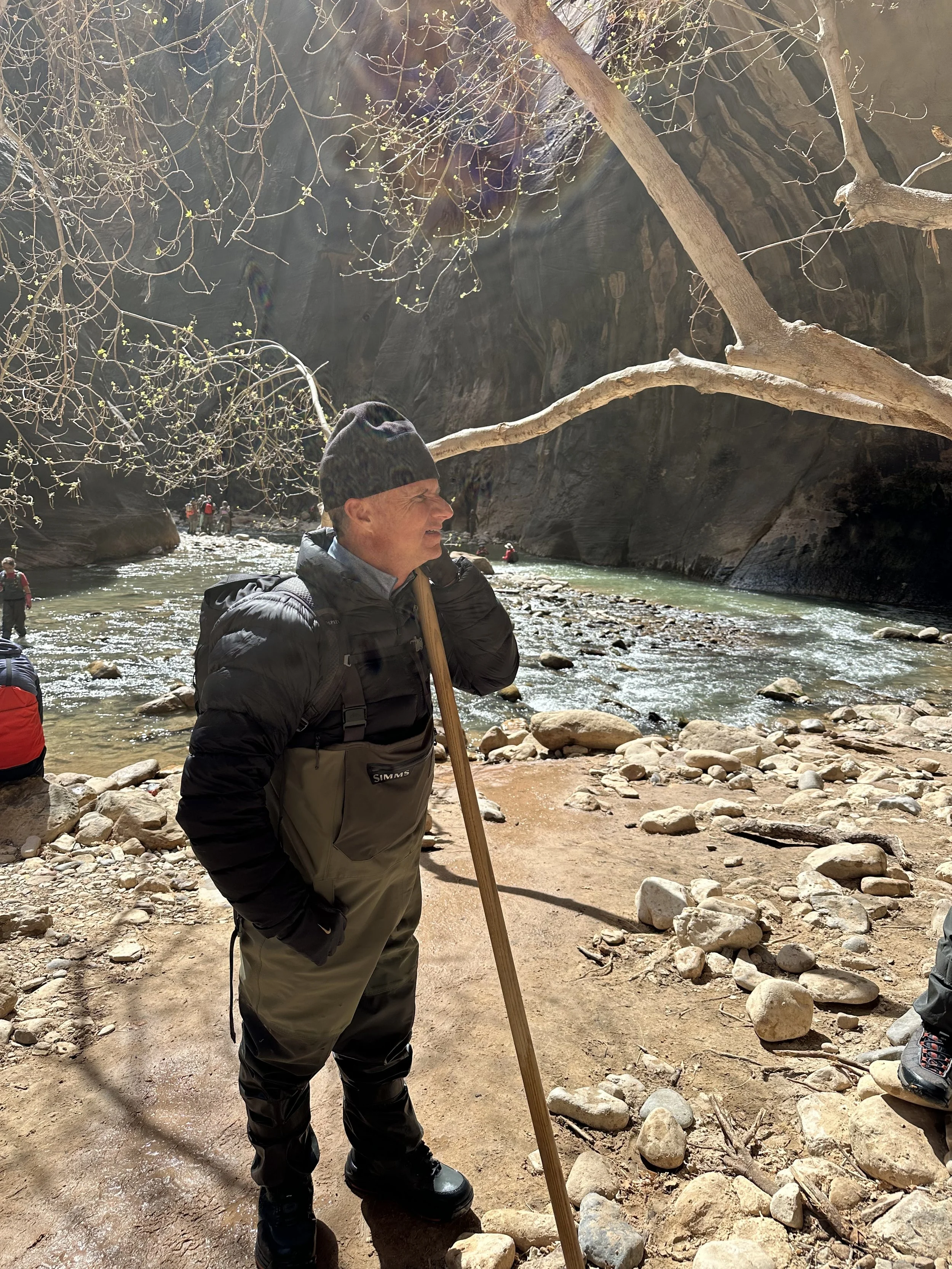
A dry bib is the single best upgrade you can make, especially outside of peak summer. It keeps your legs and core dry while you're standing in 50-degree water for hours, which changes the whole experience from something you're enduring to something you're actually enjoying. Pair it with neoprene canyoneering socks and closed-toe river shoes with real grip — flip-flops and regular sneakers don't hold up on wet sandstone, and we've watched more than a few clients learn that the hard way.
The other piece we never let clients skip is a walking stick. The current pushes harder than it looks, especially through the deeper channels, and having a solid stick gives you a third point of contact when the footing gets unpredictable. A dry bag for your phone or camera is worth adding too — there's no shortage of photo moments in there, and you don't want to be holding your phone bare-handed in moving water.
Rent your dry bib, shoes, and walking stick here and skip the guesswork on sizing and fit before you even land in Springdale.
A Few Things to Know Before You Go
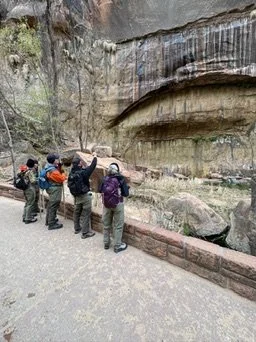
Check the flash flood forecast at the Zion Canyon Visitor Center the morning of your hike, not the night before. Storms upstream can raise water levels in the Narrows even on a clear day in Springdale, and rangers close the trail when flow gets too high for safety — this is especially true during monsoon season in July,August, and September.
A day hike from Temple of Sinawava up to Big Spring doesn't require a permit, just your park entrance pass and the shuttle. The full 16-mile top-down route from Chamberlain's Ranch does require a wilderness permit and a longer day (or an overnight), and it's not something we'd recommend without some canyoneering experience already under your belt.
Start early. The shuttle line gets long by mid-morning in peak season, and the extra daylight matters if you're going the distance.
Let Us Handle the Details
The Narrows is one of those hikes where the right gear and the right timing make the difference between a good day and a great one. Book a Zion Narrows Tour with a guide who knows current conditions in the canyon, or Reserve your dry bib and equipment if you'd rather hike it on your own schedule. Either way, want to talk through which option fits your trip? Reach out and we'll help you plan it ⬇️