
The Cedar Breaks Detour Every Zion-to-Bryce Trip Needs
The turnoff sits on Highway 14, about 23 miles up the mountain from Cedar City, and most cars keep driving. We get it — when Zion and Bryce Canyon are both on the day's itinerary, one more stop can feel like a detour you don't have time for. But this is the detour we tell almost every client to make.
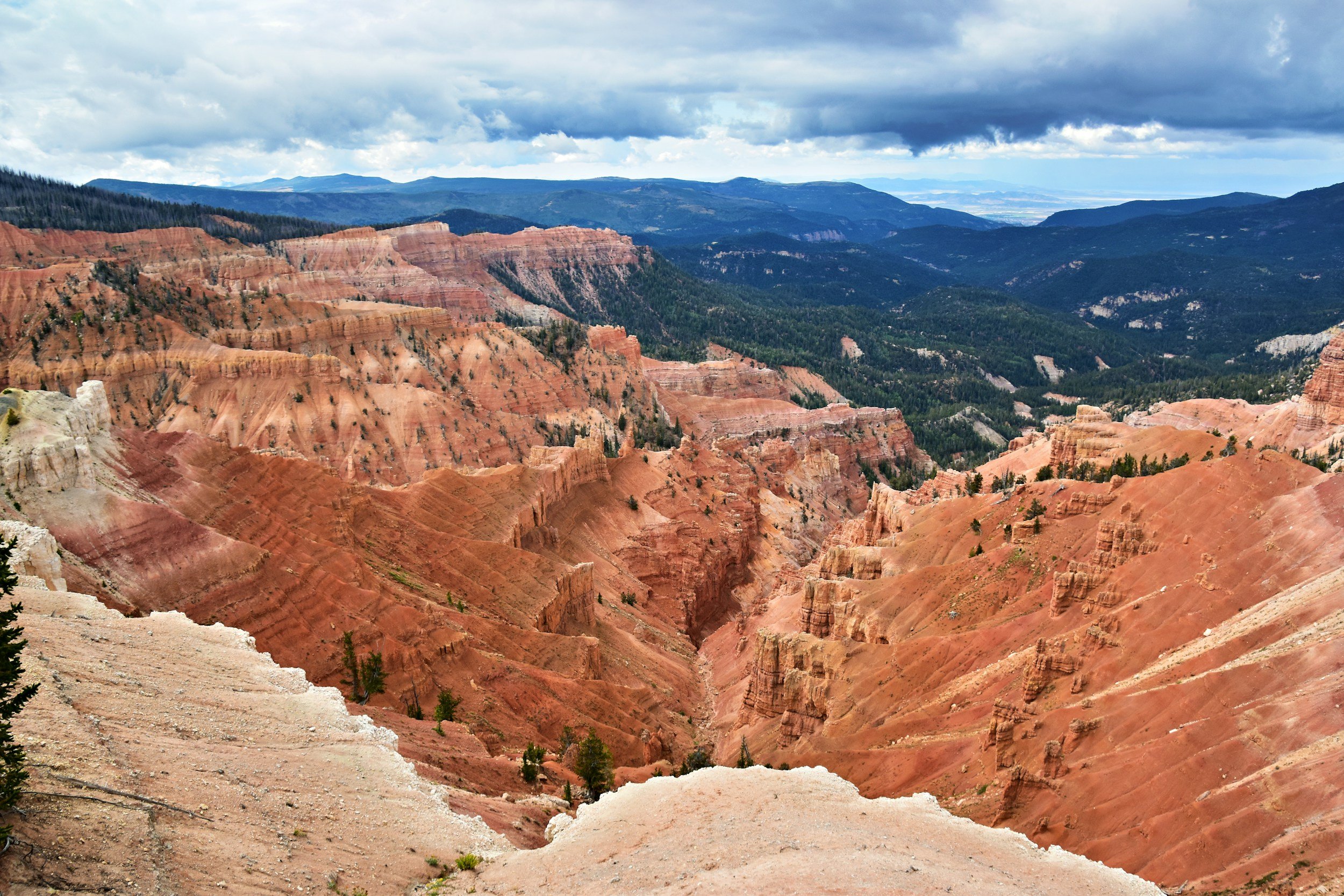
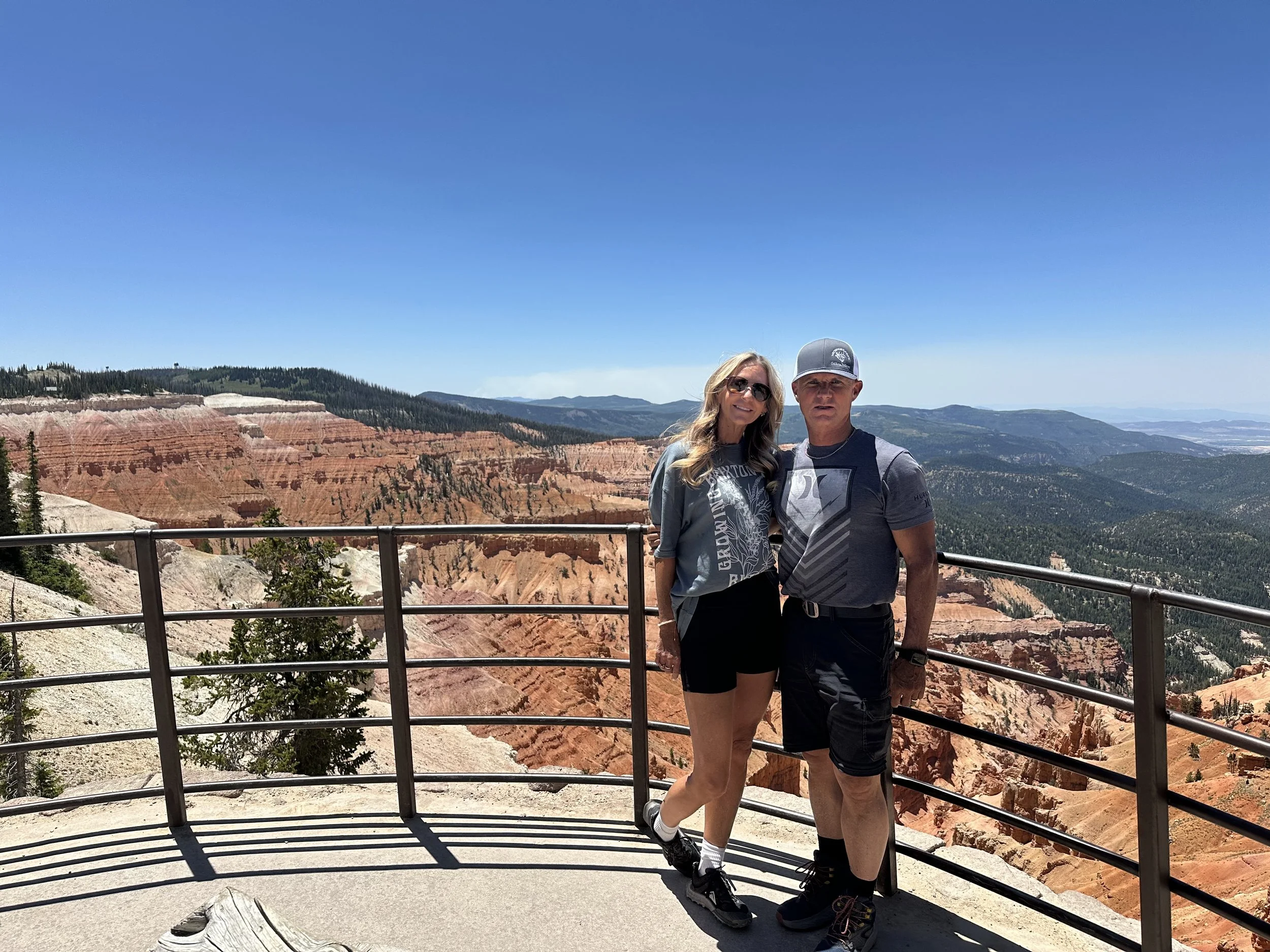
Cedar Breaks National Monument is a half-mile-deep natural amphitheater carved into the Markagunt Plateau, sitting above 10,000 feet between Zion and Bryce Canyon. The elevation keeps it 10 to 20 degrees cooler than the valley floors below, and its rim of spruce, fir, and aspen groves turns color weeks before the parks on either side of it. It's roughly a two-hour drive from Zion and closer to ninety minutes from Bryce, which makes it an easy add-on rather than a whole extra day.
The color and the temperature shift come from the same thing. When you're standing that high, everything runs on its own calendar.
Why the Elevation Changes Everything
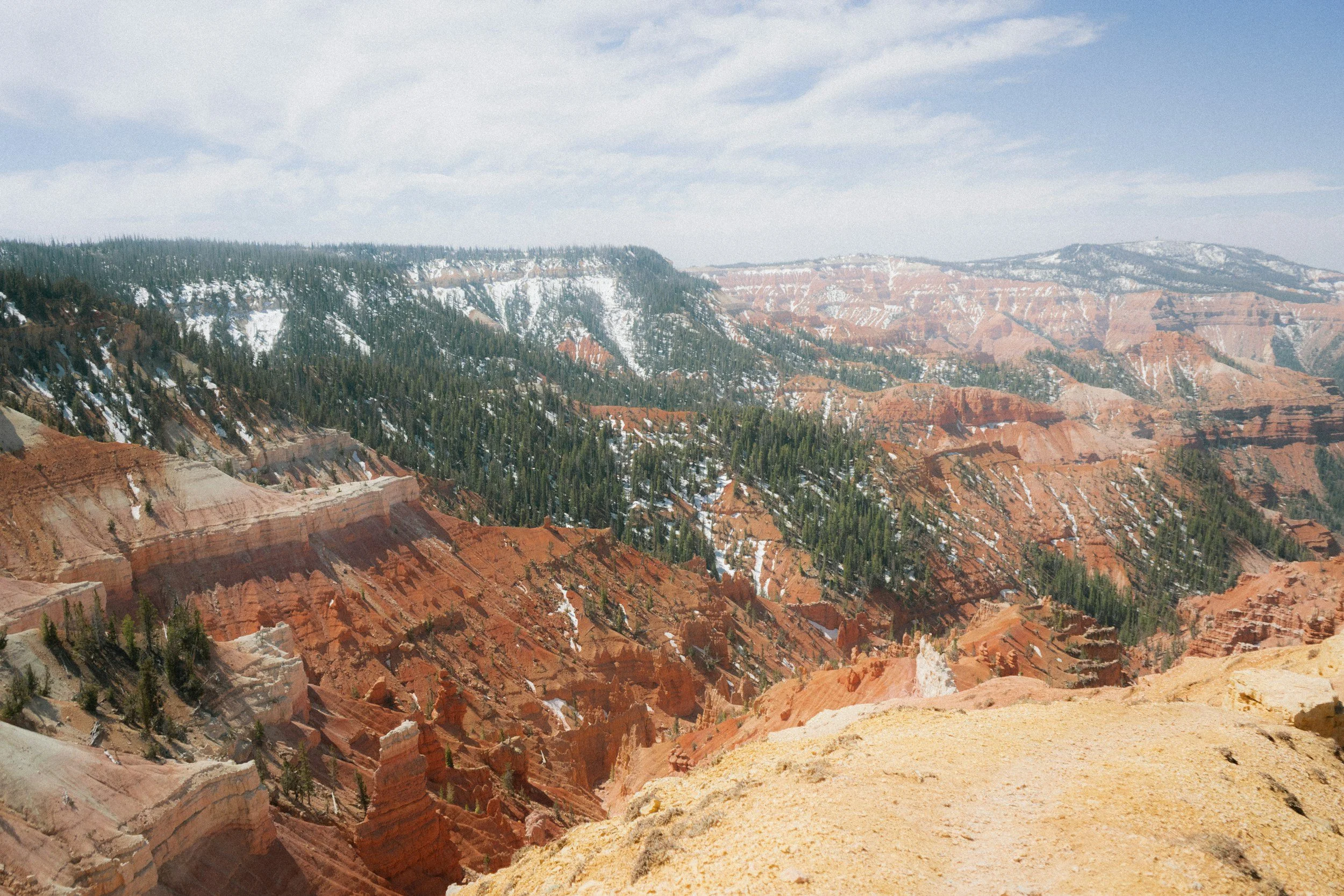
Zion Canyon sits around 4,000 feet. Bryce's main viewpoints run 8,000 to 9,000 feet. Cedar Breaks tops both of them by a wide margin, and it shows the moment you step out of the car.
The amphitheater itself is a geologic sibling of Bryce Canyon — the same family of pink, orange, and rust-colored hoodoos, carved from the same Claron Formation rock. But at 10,000 feet instead of 8,000, the air is thinner, the wind has more bite, and the forest around the rim is subalpine instead of high desert. Spruce and fir. Wildflower meadows through midsummer. Bristlecone pines, including one of the monument's oldest at over 1,600 years.
If you’ve spent the morning in Zion's heat, this is where they'll want the jacket that you packed and probably forgot about.
The Aspens Turn Here First
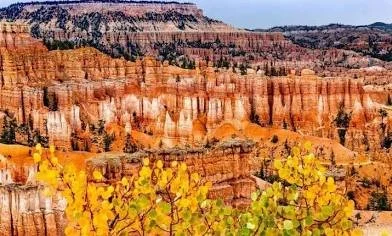
Because Cedar Breaks sits so much higher than the parks around it, its aspens are typically among the first color in southern Utah to turn, getting a head start on the cottonwoods along the Virgin River in Zion and the lower slopes near Bryce. It's the same early window we point to in our own fall guide: Utah in Fall: Why It's the Most Underrated Season to Visit
That head start is the whole case for an early-fall Zion-to-Bryce trip. Clients traveling toward the end of summer can catch real aspen color at Cedar Breaks and still have warm, clear days in the parks on either side — the shoulder-season combination people ask us for every year.
Where to Stop Along the Rim
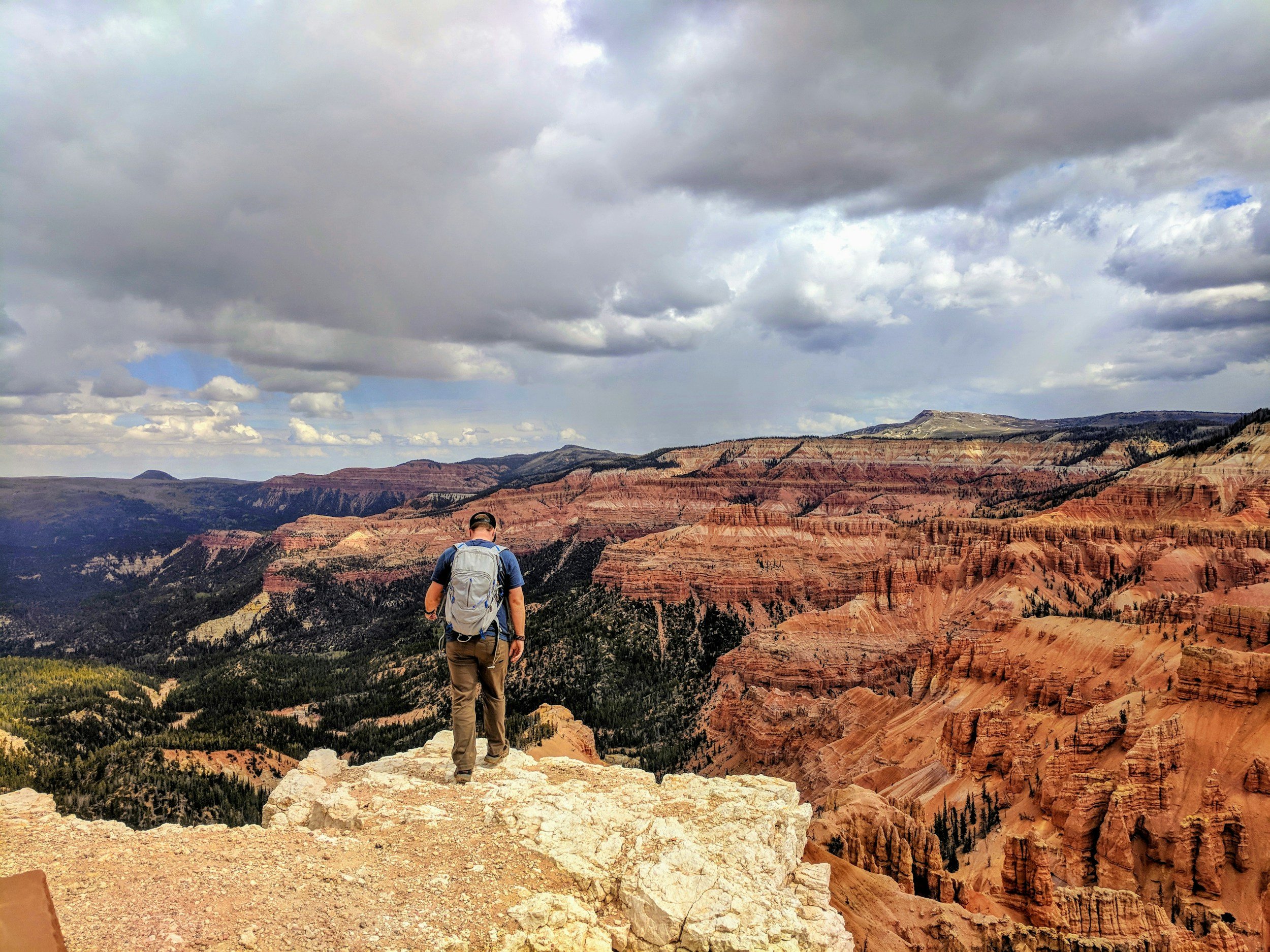
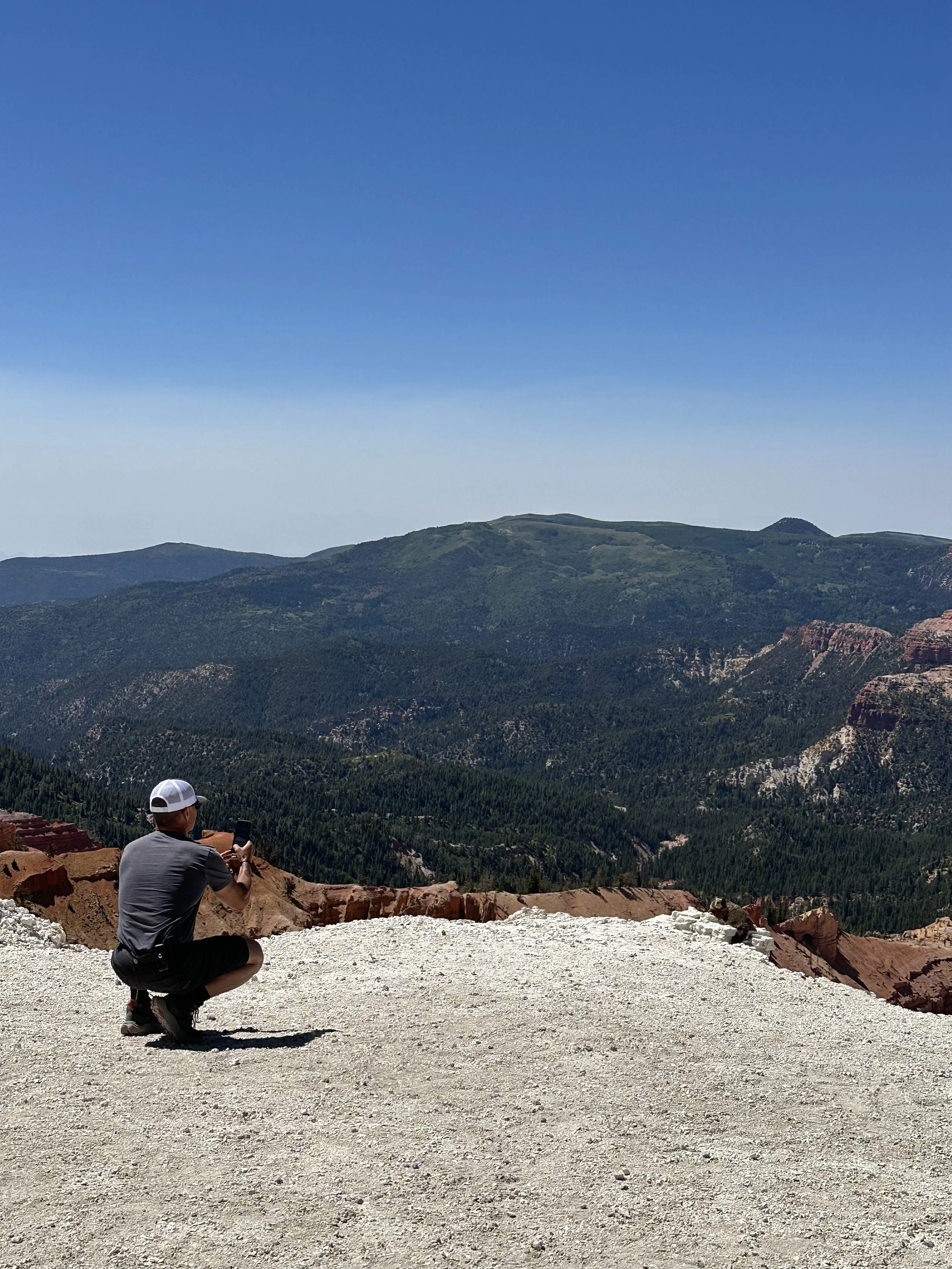
Four overlooks sit along the rim road, and you don't need more than an hour or two to hit the ones worth your time.
Point Supreme, right by the visitor center, has the longest paved path and the most amenities — restrooms, water, and a clear sightline toward Spectra Point.
Chessman Ridge Overlook is the one we send people to first. The hoodoos stand taller and more layered from this angle, and it rarely has a crowd.
Sunset View sits centrally along the drive, with a wide enough panorama that it's worth the short walk even if you're tight on time.
North View is the quick one — a short paved path near the entrance, good for a five-minute look on the way in.
If You Want to Get Out of the Car
Two trails make sense for a short stop, and neither needs a full-day plan.
Alpine Pond Trail is a two-mile double loop (with a one-mile shortcut) through meadow and spruce-fir-aspen forest, past a spring-fed pond and a stand of bristlecone pines. Easy to moderate, and a good stretch for families with kids who've been in the car all morning.
Spectra Point and Ramparts Overlook Trail follows the rim itself — two miles round-trip to Spectra Point, four if you continue to Ramparts Overlook. It runs along the 10,500-foot rim with drop-off views in every direction, and it's genuinely strenuous at that elevation. We wouldn't push it on anyone with heart or lung concerns, but for couples wanting a real overlook payoff, it's worth the climb.
Good to Know Before You Go
Fees: $25 per vehicle for seven days, $15 for anyone arriving on foot or by bike, kids under 16 free. America the Beautiful passes are accepted. Cards only — no cash at the gate.
Season: The scenic drive is a summer-and-fall destination. Snow typically closes it sometime between late October and early December, and it stays closed until late May or early June.
Camping: Point Supreme Campground sits at 10,000 feet with a mix of reservable and first-come sites, open mid-June through mid-September only. Pack for cold nights even in July.
Bonus for night owls: Cedar Breaks is a certified Dark Sky Park. If your trip allows for one late evening, the stargazing here rivals anything in the surrounding parks.
Fitting It Into a Zion-to-Bryce Day
The easiest version of this looks like: leave Zion in the morning, drive up through Cedar City, spend an hour or two along the Cedar Breaks rim around midday when the light is strongest on the hoodoos, then drop back down toward Panguitch and into Bryce by early evening. It adds real driving time to a direct Zion-Bryce run, so it works best as part of a multi-day itinerary rather than a same-day double-park push — exactly the kind of pacing question we help clients sort out before they hit the road.
Let Us Build the Route With You
If you're mapping a Zion-to-Bryce trip and want to know whether a stop like Cedar Breaks actually fits your timeline, that's exactly what we're here for. Reach out and we'll build the route with you — including where to stay, when to go, and which stops are worth the extra miles.